

Why Is My Laminate Flooring Lifting? Causes, Fixes & Prevention
Why Is My Laminate Flooring Lifting? Causes, Fixes & Prevention
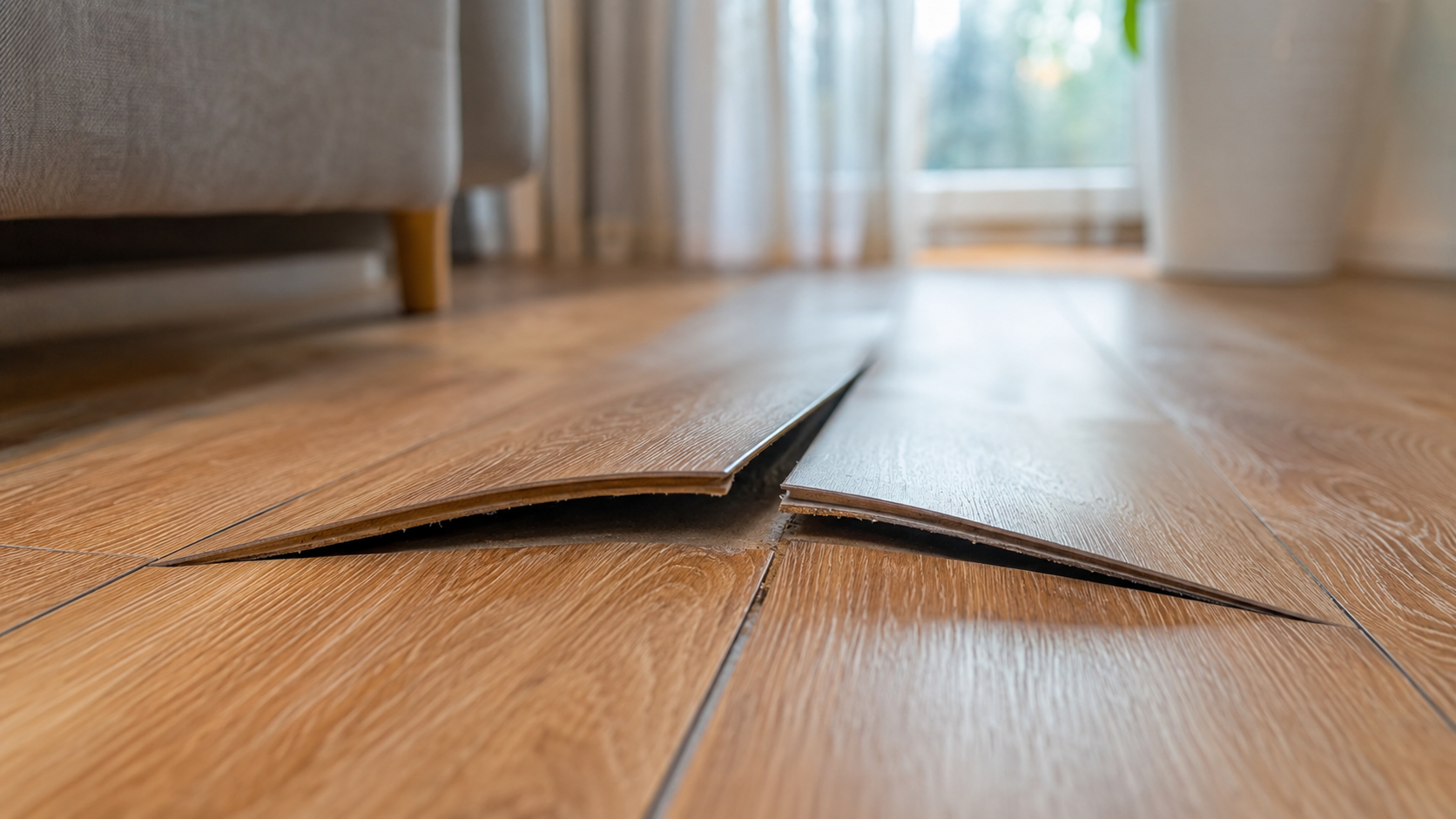
Laminate flooring doesn't lift or buckle without reason. If your floor is starting to peak, bow, or develop irritating little edges that catch your socks every single time, something is going on underneath and it is almost always fixable.
Before you panic, the good news is that most laminate lifting problems have a straightforward cause. Once you know what you are looking at, you can decide whether it needs a quick repair, a professional visit, or a full replacement. This guide walks you through everything.
Whether you currently have laminate, are considering upgrading to real wood flooring, or are simply curious about your options, understanding why floors lift is the first step to getting it right.
What Does Laminate Lifting Actually Look Like?
Not all lifting floors behave the same way, and the pattern matters when diagnosing the problem.
Peaking is where two boards push upwards against each other at the joint, creating a ridge you can feel underfoot. Buckling is when a larger section of the floor bows upward across the middle of the room. You can also get edge lifting, where individual boards rise slightly higher than the next one those annoying little lips that seem to appear overnight.
They are related issues, but they do not always share the same cause.
The Main Causes of Laminate Flooring Lifting
1. Moisture The Number One Culprit
Laminate flooring and excess moisture have never been friends. Most laminate uses a wood-based fibreboard core beneath the decorative surface layer. When that core absorbs moisture, it expands. If the boards cannot move sideways, they go upwards instead.
Moisture can come from below the floor or above it.
From below: Concrete subfloors are one of the most common sources of trouble. Concrete naturally holds moisture and releases it slowly over time. If laminate was laid directly over concrete without a suitable damp-proof membrane or proper underlay, moisture gradually works its way into the boards. You will often notice this appearing near external walls or room edges first.
From above: Leaking dishwashers, washing machines, pet water bowls, plant pots, wet footwear, enthusiastic mopping, and the mysterious kitchen puddle that nobody ever admits to causing. Bathrooms are particularly demanding on laminate even without visible standing water, steam and humidity build up gradually. A floor that copes perfectly well for a year or two can suddenly decide it has had enough.
If moisture is a persistent concern in your home, it may be worth considering waterproof flooring as a more practical long-term solution for kitchens, bathrooms, and utility rooms.
Signs of moisture damage include swelling around board edges, lifting near appliances, spongy areas underfoot, discolouration, or a slightly cloudy or bubbled surface. Unfortunately, once laminate boards have swollen properly, they very rarely return to their original shape. At that point, replacement is the realistic answer.
2. Inadequate Expansion Gaps
Laminate flooring moves naturally throughout the year. It expands in warmer, more humid conditions and contracts when temperatures drop. This is entirely normal and it is exactly why a gap is left around the perimeter of the room during installation. That gap gives the floor space to breathe without pushing into walls or skirting boards.
Problems arise when that gap disappears. Skirting boards refitted too tightly. Kitchen units pinning the floor down. Someone deciding the gap looked a bit untidy and quietly removing it. Then summer arrives, the boards expand, and the floor starts lifting in the middle of the room.
Inadequate expansion gaps are one of the most common causes of laminate peaking and buckling in UK homes.
How to check: Remove a section of skirting board near the lifted area. There should be approximately 8 to 12 millimetres of clear space between the edge of the laminate and the wall. If the floor is pressing hard against the wall with almost no gap, you have likely found your answer.
The good news here is that if the boards themselves are undamaged, the floor can often be saved by lifting sections, correcting the gap, and relaying properly.
3. Uneven Subfloors
Laminate flooring is unforgiving when the surface beneath it is not level. If the subfloor dips or rises unevenly, boards flex slightly every time someone walks across them. Over time, that repeated stress weakens the locking joints between boards. Clicking noises or springy movement underfoot are often early signs that the subfloor was not flat enough from the start and visible lifting follows later.
High-traffic areas suffer most. Hallways and doorways take constant punishment, and poorly clicked locking joints gradually pull apart under foot traffic.
This is one reason why many homeowners with uneven or challenging subfloors opt for luxury vinyl flooring (LVT), which tends to be more forgiving over minor subfloor imperfections than laminate.
4. Heavy Furniture
Large wardrobes, kitchen islands, and heavy freestanding units effectively pin sections of laminate in place while the rest of the floor continues its natural seasonal movement. Laminate flooring is designed to float it is not meant to be locked down in patches. When it is, stress concentrates in the surrounding boards, which can lead to lifting and joint separation over time.
What You Can Check Yourself
Before assuming the entire floor needs replacing, run through these checks first.
Press gently on the lifted section. If it drops back down and holds temporarily, the locking joint may still be intact which is a better sign than it looks.
Remove the nearest skirting board and inspect the expansion gap properly. Many laminate problems become immediately obvious once the skirting comes off.
Inspect the underside of a lifted board near the room edge. Dark staining, swollen edges, or damp underlay point towards moisture getting in from somewhere.
Look at the pattern of lifting, because it usually tells you the cause:
- Lifting near dishwashers, sinks, or washing machines → moisture
- Lifting around room edges → expansion gap problems
- Lifting running in a line across the room → uneven subfloor
- One single lifted board → damaged locking joint
What Not To Do
A few approaches make laminate lifting significantly worse.
Do not stamp boards back into place repeatedly and hope the problem resolves itself. It will not.
Do not glue laminate boards to the subfloor. Laminate is designed to float and move. Fixing sections down forces stress into adjacent boards and usually creates more lifting elsewhere.
Do not refit skirting boards tightly after creating an expansion gap. The gap only works if it stays clear.
Do not put a rug over the problem. It improves the appearance temporarily, but it does not fix anything. It just creates a more aesthetically pleasing problem.
Should You Repair or Replace?
Repair is realistic when:
- The problem is an inadequate expansion gap and boards are otherwise undamaged
- Only one or two boards have lifting locking joints
- The floor is relatively new and moisture has not reached the core
Replacement is usually necessary when:
- Moisture has caused boards to swell swollen laminate very rarely returns to its original dimensions
- Locking joints are broken and boards no longer connect properly
- Lifting is widespread across large areas of the floor
- The subfloor itself has not been properly addressed
When lifting spreads across a significant area, chasing individual repairs becomes increasingly impractical. At a certain point, replacing the floor is the more sensible and cost-effective decision.
If you are weighing up your replacement options, herringbone and parquet flooring is worth considering it adds a classic, high-end feel and is available in engineered wood, LVT, and laminate formats to suit a range of budgets.
When to Call a Professional
Some laminate issues are manageable as DIY projects. Others become expensive precisely because people attempt DIY repairs two or three times before calling for help.
Consider getting professional advice if:
- Large sections of flooring are lifting
- There are signs of moisture beneath the floor
- Boards are visibly swollen or warped
- The subfloor feels uneven or springy
- You are not confident lifting and relaying boards without damaging the surrounding floor
A professional can also identify hidden problems slow leaks, damp concrete subfloors, or subfloor movement that are not visible from above. Fixing the symptom without fixing the underlying cause simply means the problem returns.
How to Prevent Laminate Lifting
Many lifting problems trace back to installation details that seem minor at the time but matter enormously later.
Use the right underlay, particularly over concrete subfloors. Quality underlay acts as a moisture barrier as well as providing cushioning and support for the floor above.
Maintain proper expansion gaps throughout the room around 8 to 12 millimetres and resist the temptation to close them up when fitting skirting boards.
Allow the flooring to acclimatise before fitting. Boards brought from a cold storage environment and fitted immediately into a warm home are far more likely to move and lift afterwards. Leave them in the room for at least 48 hours before installation.
Avoid rushing the installation. Floors have an impressive ability to expose shortcuts, usually at the least convenient moment.
Thinking About New Laminate Flooring?
If your current floor has reached the end of its life, or if you are planning a new installation and want to get it right from the start, UK Floor Depot offers a wide range of laminate flooring options to suit every budget and style from classic oak tones to contemporary grey finishes.
Browse our full collection and find the right option for your home. If you have questions about which product suits your subfloor, room type, or lifestyle, our team is happy to help.
Have a question about your laminate floor? Get in touch with the UK Floor Depot team we have been helping UK homeowners choose and care for their flooring since 1994.
Read more

The Best Flooring for a Conservatory
A conservatory is one of the hardest-working rooms in a British home and its floor takes the biggest hit. From summer heat to winter chills and muddy garden boots, not every flooring can handle it....
Read more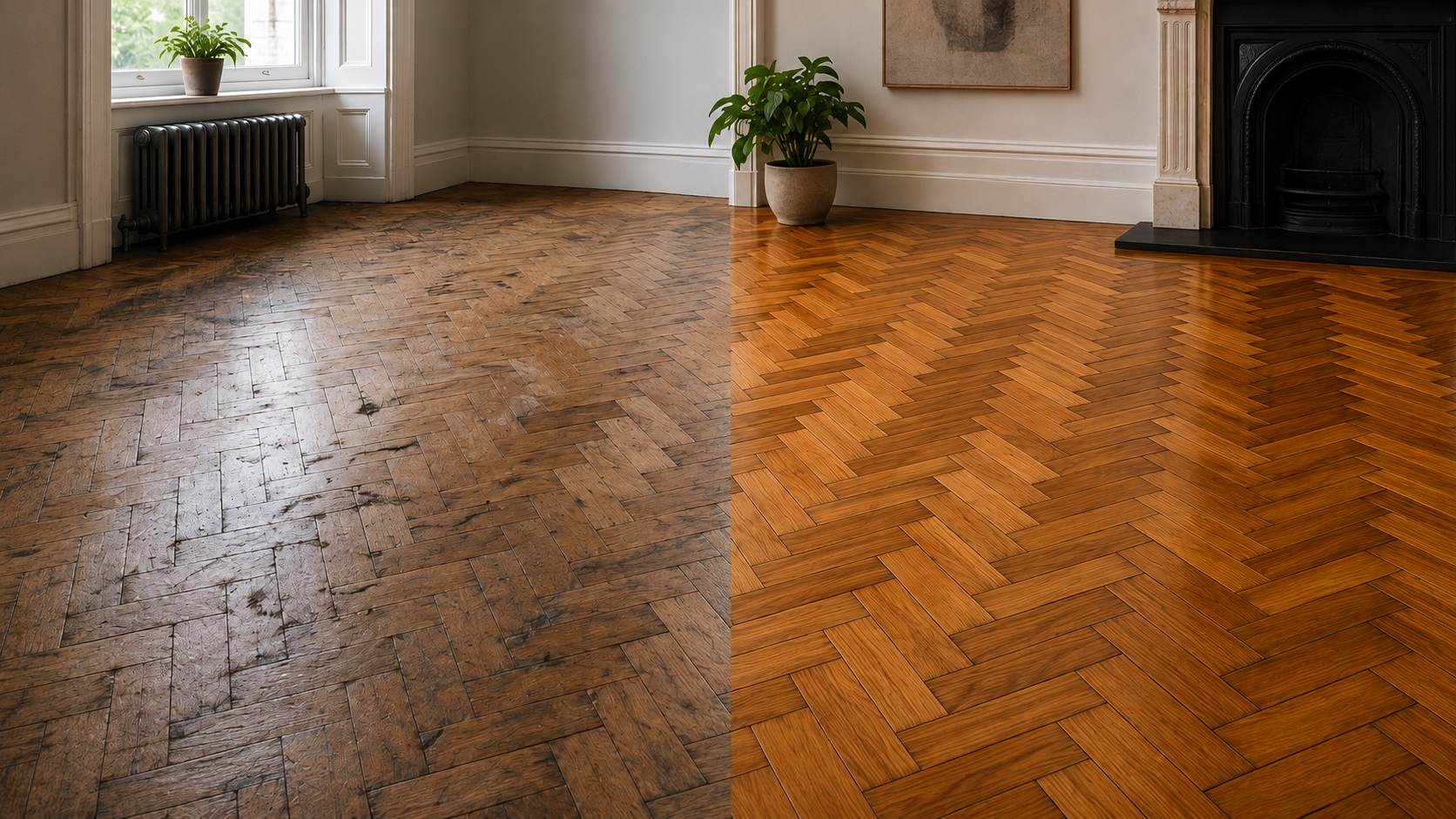
How to Restore Parquet Flooring: An Expert Guide to Renewal and Care
Parquet flooring is one of the most characterful and enduring choices for any home but like all floors, it needs a little care over time. From dull finishes and loose blocks to gaps and surface scr...
Read more


Leave a comment
This site is protected by hCaptcha and the hCaptcha Privacy Policy and Terms of Service apply.